I really enjoyed my garden safari today. Saw both Red Admirals and Small Tortoiseshells on the Red Valerian. But this early Rosa canina flower stole the show.
Blog
I blog about nature in the Norfolk countryside and about my wildlife garden. My blog blends digital photos with an analogue nature journal.
Nature journalling blends nature observation and citizen science with a written diariy or art journal to build a deeper connection with nature and cultivate curiosity, creativity and flow.
Foxglove Season
Foxgloves are one of my favourite flowers.
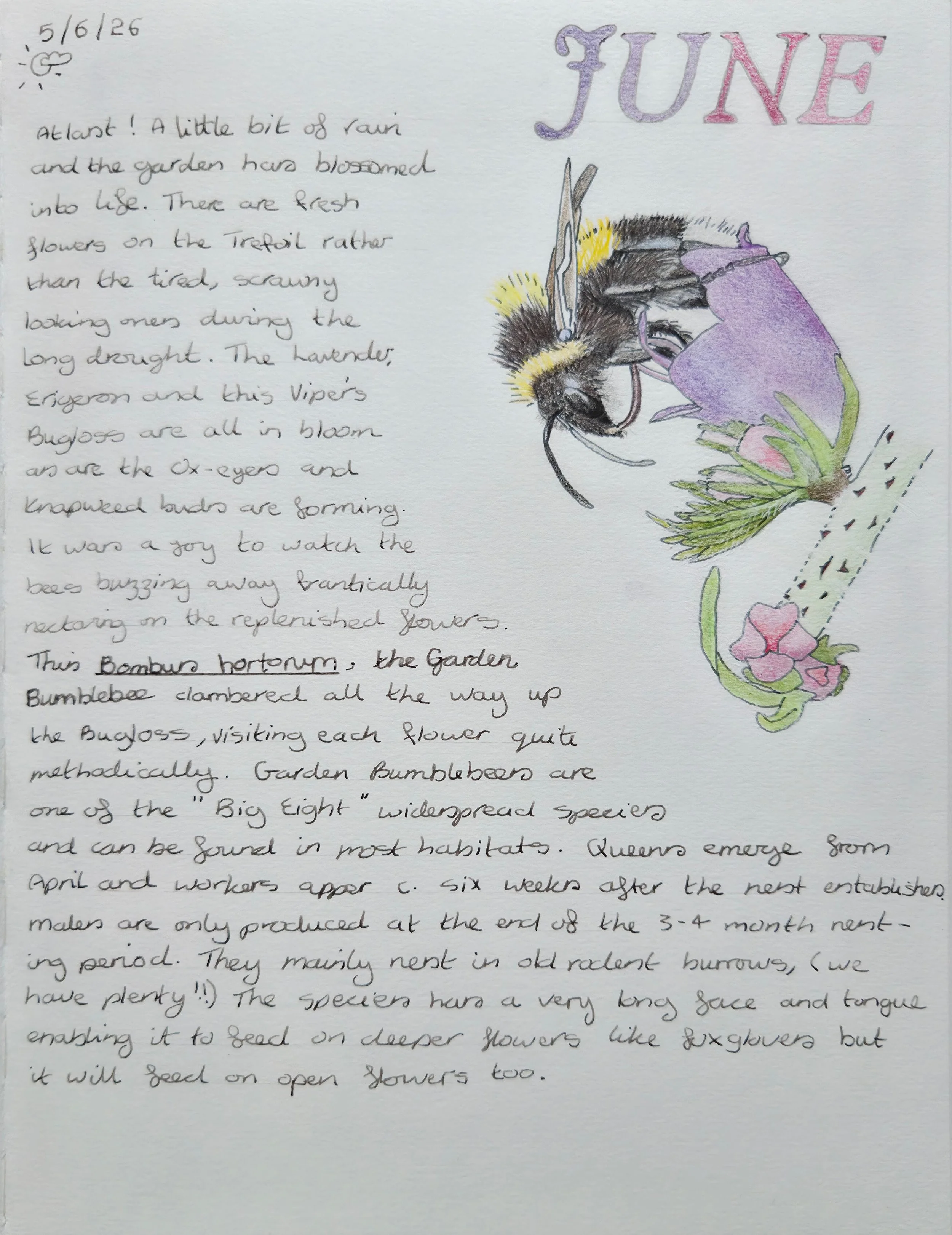
Garden Bumble-bee on Viper's Bugloss
I'm not very good at identifying Bumblebee species so I was pleased to figure out what this one was and read up on it a bit
A Record Breaking May
The second warmest May on record! And the beginnings of a dry spell with only 15 mm of precipitation recorded for the month.
May Heatwave
Nature journaling the extreme (for UK) weather conditions both heat and drought, which are massively impacting our wildlife garden at the moment.
A Tale Of Two Moths
The hot weather seems to have brought quite a few lepidoptera out. Both of these day flying moths were nectaring on Common Bird's-foot Trefoil, one of their caterpillar host plants. I wonder if they are earlier than usual. I didn't think to add in that data. May try to do so...
Which Brown Butterfly? - A Photographic Identification Guide to Norfolk's Brown Meadow Butterflies
Which Brown Meadow Butterfly Did I See?
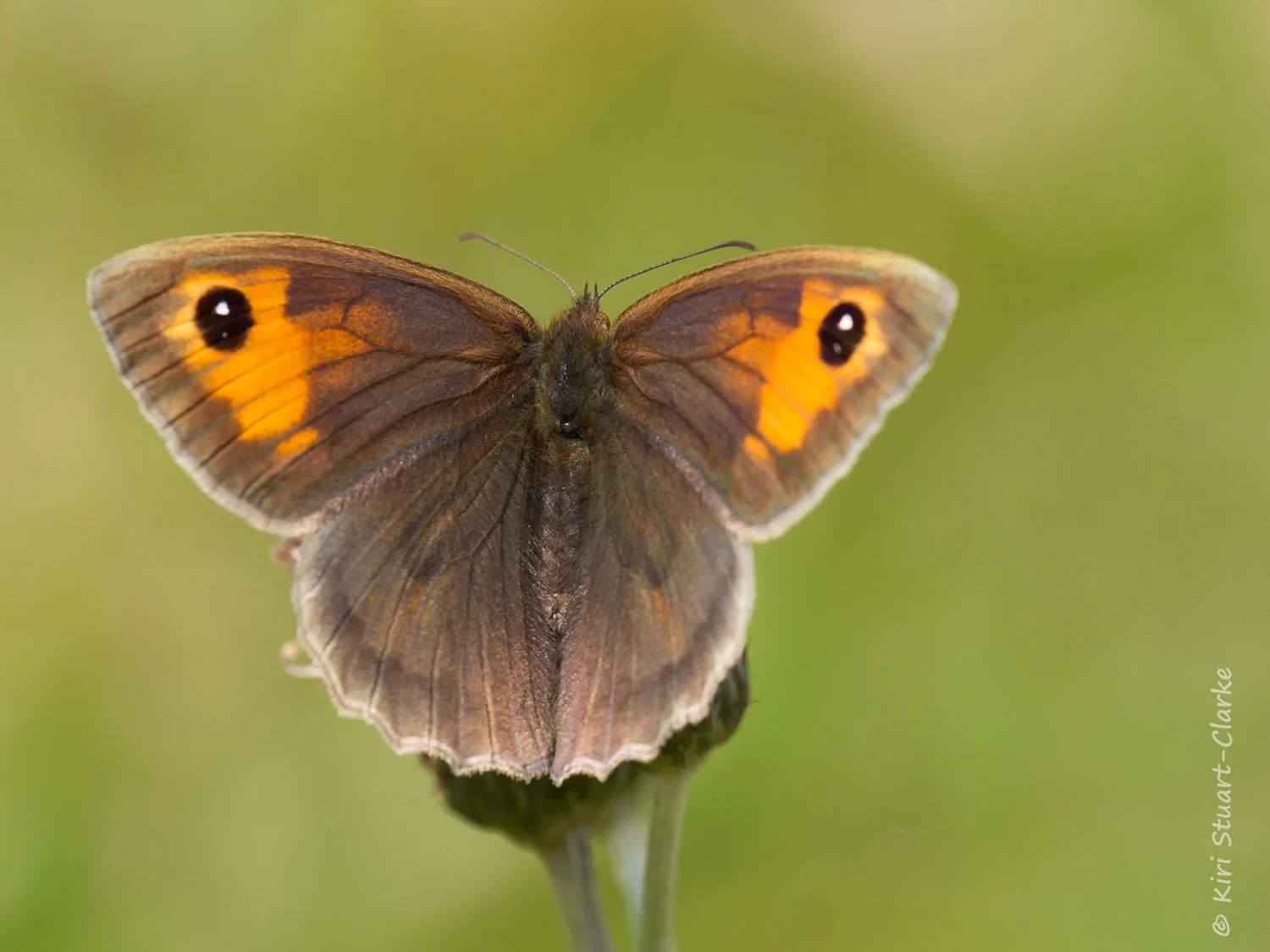
Meadow Brown butterfly basking
Summertime brings out the beautiful flowers in Norfolk's summer meadows, a rich palette of deep magenta of Knapweed contrasting with cheery white Ox-eye daisies alongside the vibrant red of Field Sorrel and abundant native grasses. This turning of spring into high summer also brings with it a flurry of grassland and meadow butterflies.
As grassland species, the Brown or Satyridae family of butterflies evolved to survive in roughly similar kinds of habitat. As a result, these handsome, oft brown and orange-hued meadow butterflies can look quite similar, especially from a distance, and so be tricky to distinguish. Most field guides are structured a page or two per butterfly, so here are a few comparative tips to help identify the British grassland butterfly species in Norfolk, supported with side by side photos.
The butterflies covered in this article are:
Small Heath
Gatekeeper
Meadow Brown
Wall Brown
Ringlet
Speckled Wood
Grayling
The Marbled white is not officially resident in the county and is restricted to chalk downland of which there is very little in Norfolk. That said we do occasionally get reports of released individuals, so it is worth bearing in mind particularly when visiting sites such as Ringstead in the west of the county. The chocolate brown and cream checker board markings of Marbled Whites are very distinctive and should not be a source of confusion but images for this species can be viewed in my white and yellow butterfly identification guide. Not covered in this article are the Large Heath, Mountain Ringlet and Scotch Argus, butterflies of our northern moors, bogs and mountains.
Don't rely on Forewing Roundel Spots
In many species, field guidebooks highlight the forewing upper side roundel as a rule of thumb for identification, but it's important to know this is not a definitive identifying characteristic as the number of white eye-spots in forewing roundels in particular can vary. The hindwing underside markings should always be used alongside forewing roundels to confirm butterfly identification.
Eliminate Skipper Butterflies
Since several of the smaller Browns have a splash of orange, there is just a small risk of confusion with Skippers in the field. There are three skippers in Norfolk and although they have slightly different seasons, all do fly around the same time as meadow butterflies in meadow and grassland habitats. Their smaller size, triangular wing shape and markings as well as their characteristic sudden jumping or skipping flight behaviour should help distinguish these even if viewing from a distance. To identify Skipper butterflies check out my separate Skipper identification guide.
Orange-Brown “Confusion” Meadow Species
The three main visually similar Brown family butterflies that can cause confusion are the Small Heath, Gatekeeper, and Meadow Brown although the Wall Brown does also have a pattern with orange markings.
Small Heath
The Small Heath is the smallest butterfly in the Browns family. It rarely basks and feeds with its wings held shut, so very little of it's orange forewing may be on display. Like the Meadow Brown, it usually has a single white eyespot in it's black forewing roundel, but size, behaviour and habitat should in practice readily differentiate the two species. The Small Heath is a much smaller, more secretive butterfly and it excels at camouflage amongst dead grasses on heathland, whereas in fine weather the larger Meadow Brown drifts from flower to flower in meadowlands.
On close inspection, Small Heath butterflies’ hind wings have a wide pale beige fringe, along with a well- defined wavy cream band that contrasts clearly against it's brown base. It also has a variable number of subtle brown roundels. In contrast the larger Meadow brown has very plain grey-brown hindwing undersides with a subtle wide beige band. It's wing edges are more fluted than the Small Heath too.
Gatekeepers
The next smallest butterflies in the Brown family are Gatekeepers, formerly known as Hedge Browns although it's caterpillar host plants are grasses. They are tidy and compact in form and often found dancing higher up along hedgerows or woodland rides as well as nectaring in flowery grassland or visiting gardens. It quite often basks with its wings open, unlike the Small Heath. In the field this cheery, confident vivid orange and brown butterfly is most likely to be confused with Large Skippers or Meadow Browns with whom it often feeds. In size, it is larger than the former and smaller than the latter, with a neat, vivid appearance.
The Gatekeeper’s forewing does usually have two white central eyespots but this is not always a reliable indicator. It's hindwing undersides are a mid-brown with a wavy beige band that, to me, looks like a reversed question mark or an upside down cedilla shape. The Small Heath’s hindwing pale band is paler and more of a cream or ecru. Gatekeepers have small white spots rather than roundels on their hind wing. Male and female Gatekeepers’ gender can incidentally be differentiated by the number of small white spots on their underwings. The male has 3 white spots in the C part of the upside down cedilla whereas the female has 2.
Small Heath Vs Meadown Brown - Side by Side Identification
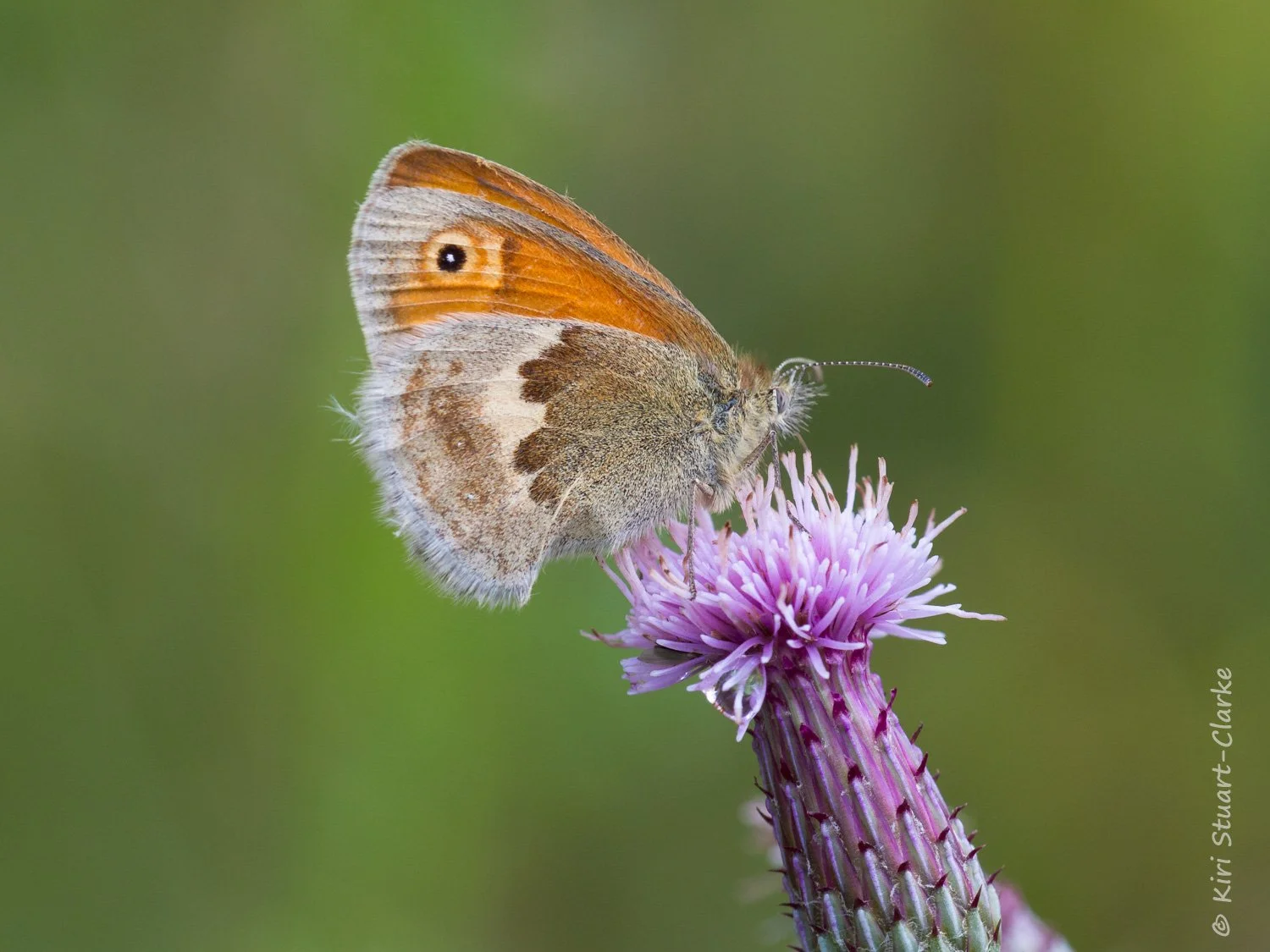
The Small Heath’s hindwing has a well-defined cream band and small variable brown roundels with pale eyespots. Note the wide buff fringe on the hindwing.
The Meadow Brown’s hindwing is plainer with a wide beige band that blends into it's grey- brown base colour. It lacks roundels and the wide pale fringe.
Small Heath vs Gatekeeper - Side by Side Identification
The Small Heath's hindwing is overall paler than the Gatekeeper with the wide grey-white wing fringe and well-defined cream band. It has variable brown roundels.
The Gatekeeper usually has two spots in its forewing roundel but it is the hindwing white spots that are definitive. Note the hindwing’s overall richer brown hue.
Gatekeeper vs Meadow Brown - Side by Side Identification
Gatekeepers often perch with their top wings showing their rich orange. Note this female has 3 white spots in the centre of the upside down cedilla.
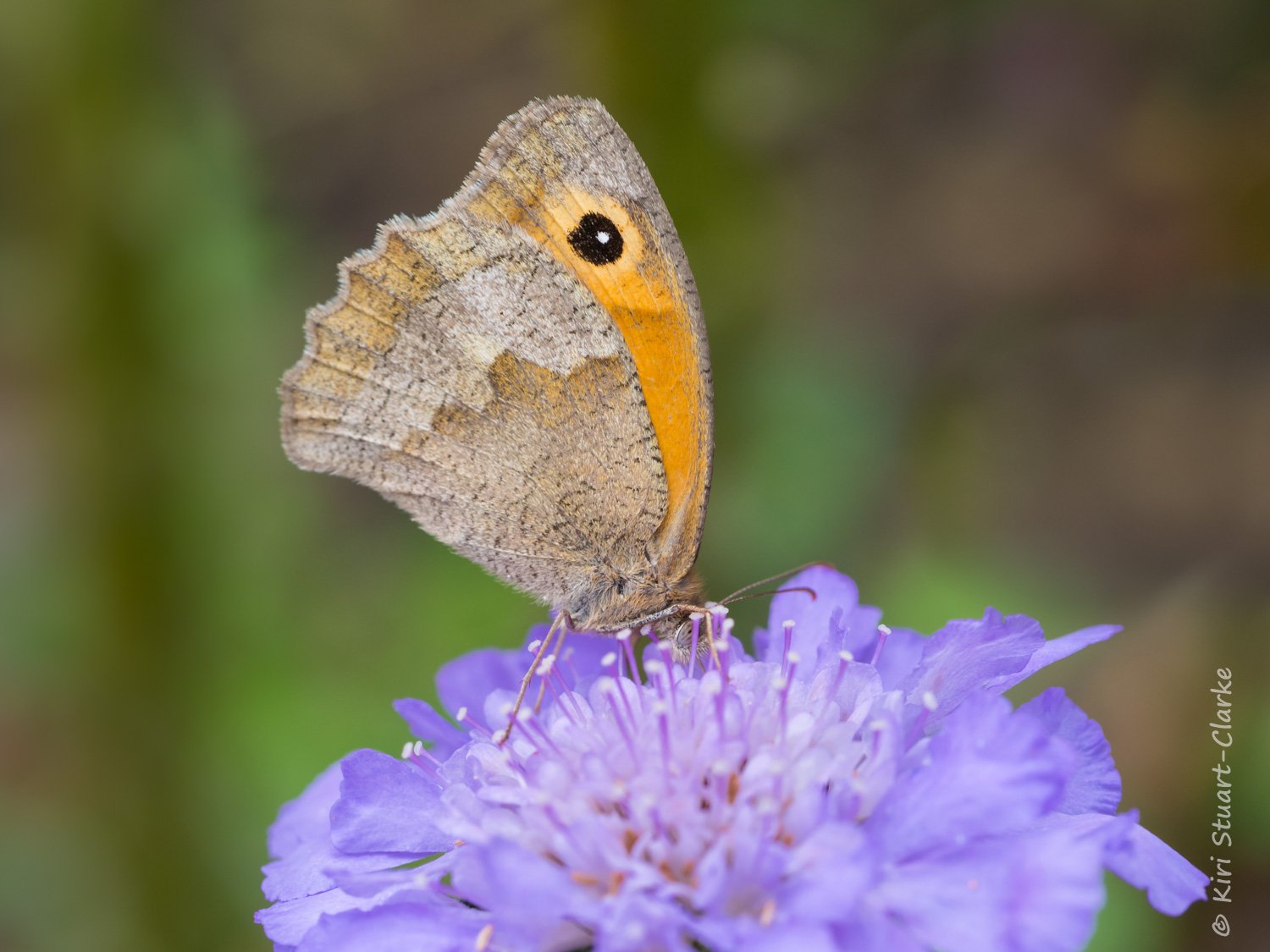
Meadow brown with a lone white eyespot in it's forewing and a plain buff rear wing underside with it's wide paler band lacking contrast against a grey-brown base.
Orange-Brown Butterfly Confusion Species - Wings Open
When basking with their wings open, Meadow Brown butterfly forewings have a smaller area of orange than Gatekeepers, although the male Gatekeeper has a pronounced dark brown sex band on its forewing. Meadow Brown rear wings are completely brown while Gatekeepers have an orange panel containing a small dark roundel with a single pale eye-spot. The Meadow Brown’s orange panel is often less vivid than the Gatekeepers’ and is a more yellowy orange as it's wings quickly bleach to a faded hue.
Gatekeeper Vs Meadow Brown Forewing Side by Side Identification
Female Gatekeeper butterfly with wings open. Note the lone dark roundel on the hind wing with a white eyespot and Forewing black roundel with twin white eye spots.
A male Gatekeeper displaying its forewing gender band for comparison, this bisects it's orange panel diagonally.
The Meadow Brown’s forewing has a smaller orange area and the hindwing lacks both roundel and orange area. Note the hint of a second white spot in the forewing roundel.
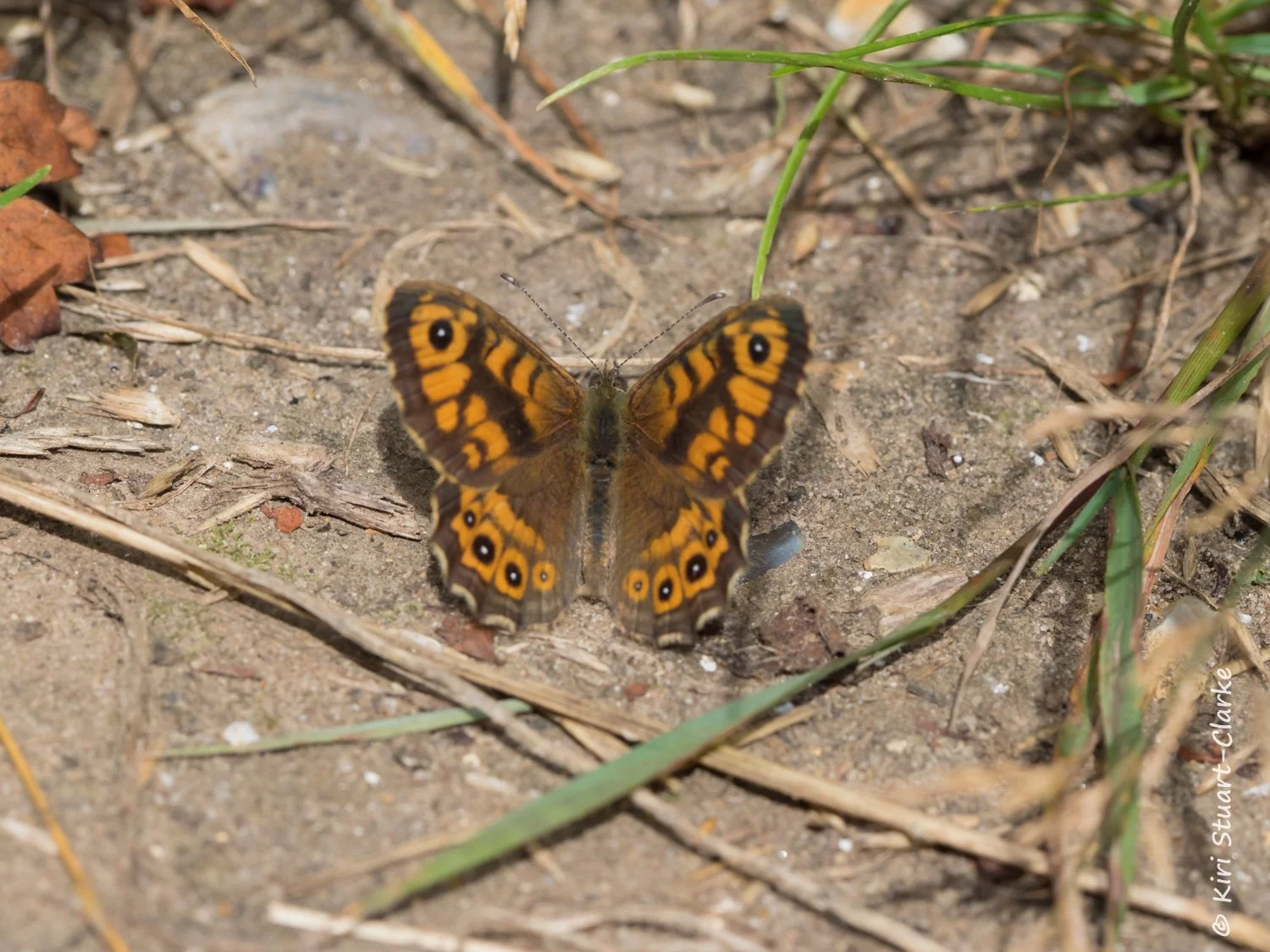
The Wall butterfly has a checkered orange and dark brown pattern with clearly defined fore- and hindwing roundels.
Wall Brown vs Speckled Wood - Side by Side Identification
In profile, there are slight similarities in the check placement, and the orange may be more muted from the underwing, but the Speckled Wood is a much richer chocolate brown while the Wall Brown is a paler beige-brown
The Wall Brown has a similar marking placement in profile but is a paler beige brown.
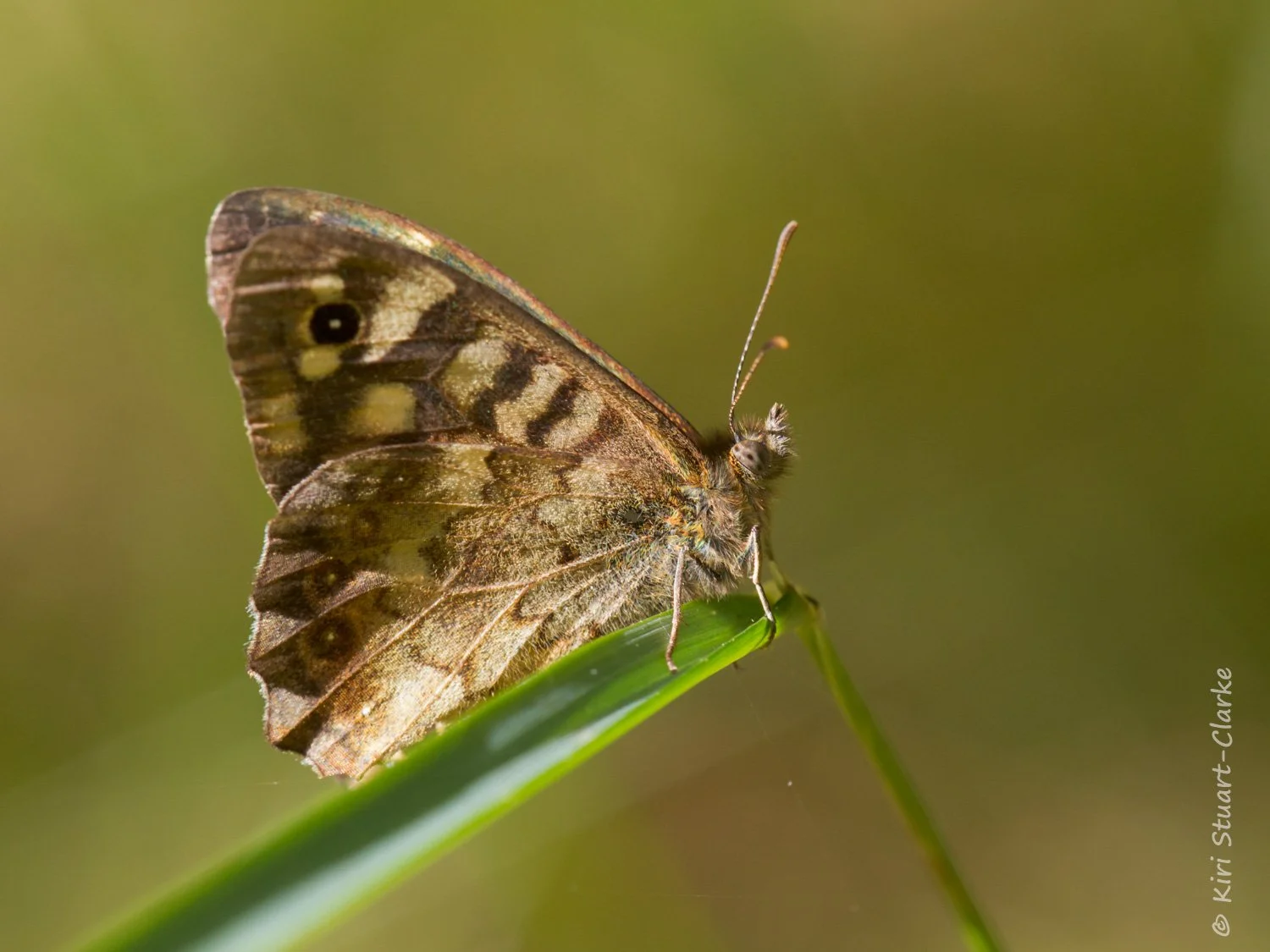
In profile the Speckled Wood lacks any orange and displays it's deep chestnut brown and cream checks and wing roundel pattern.
Wall Brown vs Speckled Wood Forewings - Side by Side Comparison
The upper side forewing markings are distinctly different, with the Speckled Wood having cream checks on a predominantly dark brown base whereas the Wall Brown has orange checks. These surround its dark roundels, making them much more visible than those on the Speckled Wood, even though they are positioned similarly.
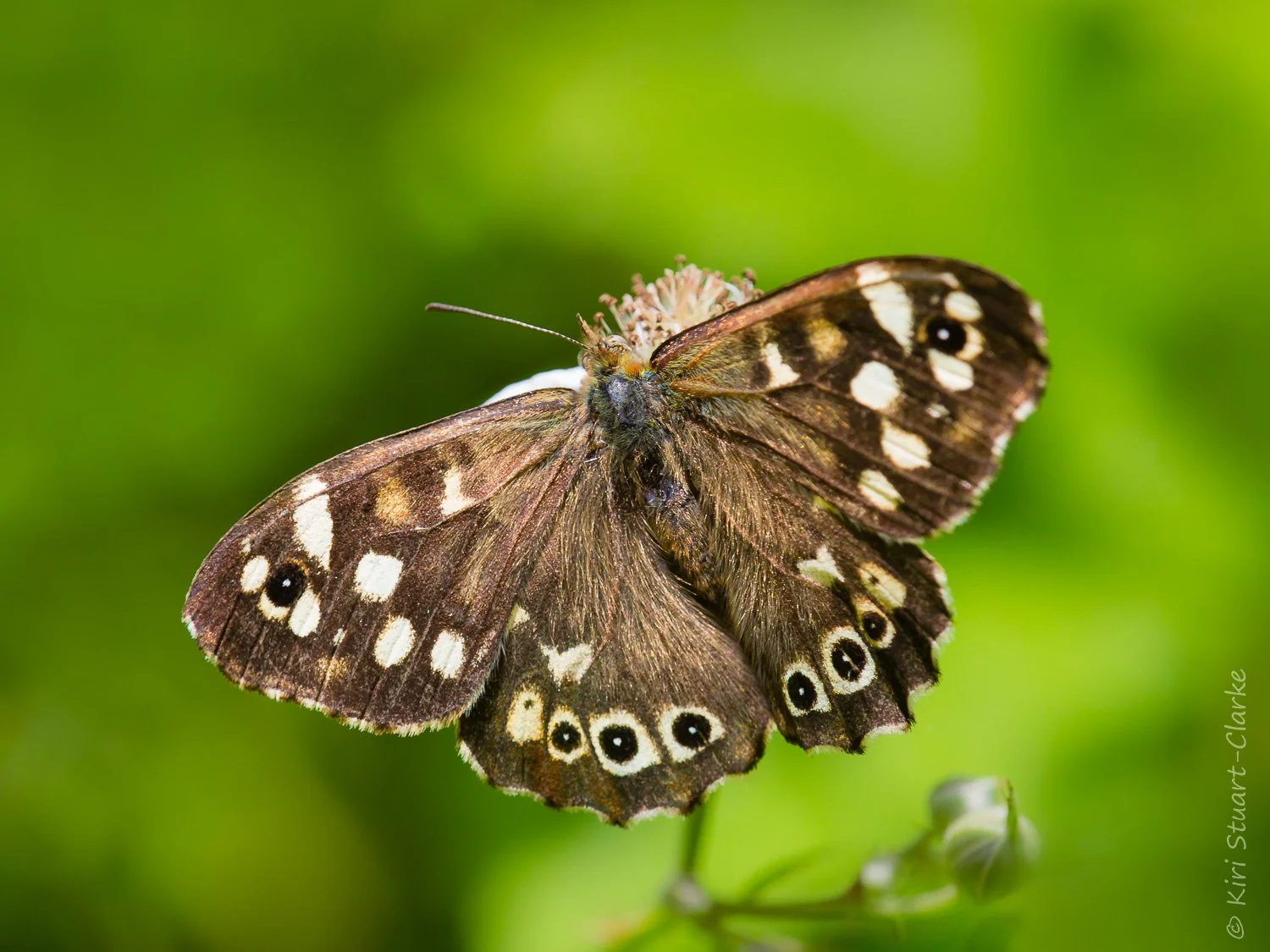
Speckled Wood butterfly open-winged displaying it's dark chocolate brown and cream checkered markings.
The upperside wings show the Wall Brown’s well-defined orange and chocolate tiger stripe camouflage pattern
Ringlet
The Ringlet is the darkest of all the brown butterflies and has the most similar hue to a Speckled Wood, however the wings lack any pale markings so confusion is unlikely between the two. The greatest liklihood of confusion is between faded specimens of Meadow Browns and Ringlets as they often share habitat and fly at similar times.
Ringlet Vs Meadow Brown Side by Side Comparison (fresh examples)
The Ringlet’s hindwing has a dark chocolate brown background and clear dark roundels.
The orange forewing is usually visible but Meadow Brown’s are altogether a paler brown and lack hindwing roundels.
The Ringlet’s upper side is again a dark coffee base colour with a white fringe and roundels on each wing.
The Meadow Brown’s orange upperside forwing usually helps distinguish it even in a darker than usual individual.
This ringlet has faded to be a closer brown shade to the Meadow Brown and has lost most, but not all of its hindwing roundels.
This Meadow Brown is lacking most of its orange panel. But it can still be identified due to lacking roundels on the hindwing.
Grayling
As the largest butterfly in this group and being very restricted to coastal dune colonies in Norfolk, the Grayling should be relatively straight forward to identify. It has a mottled chocolate brown to pale grey-beige coloured underside and usually rests with closed wings.
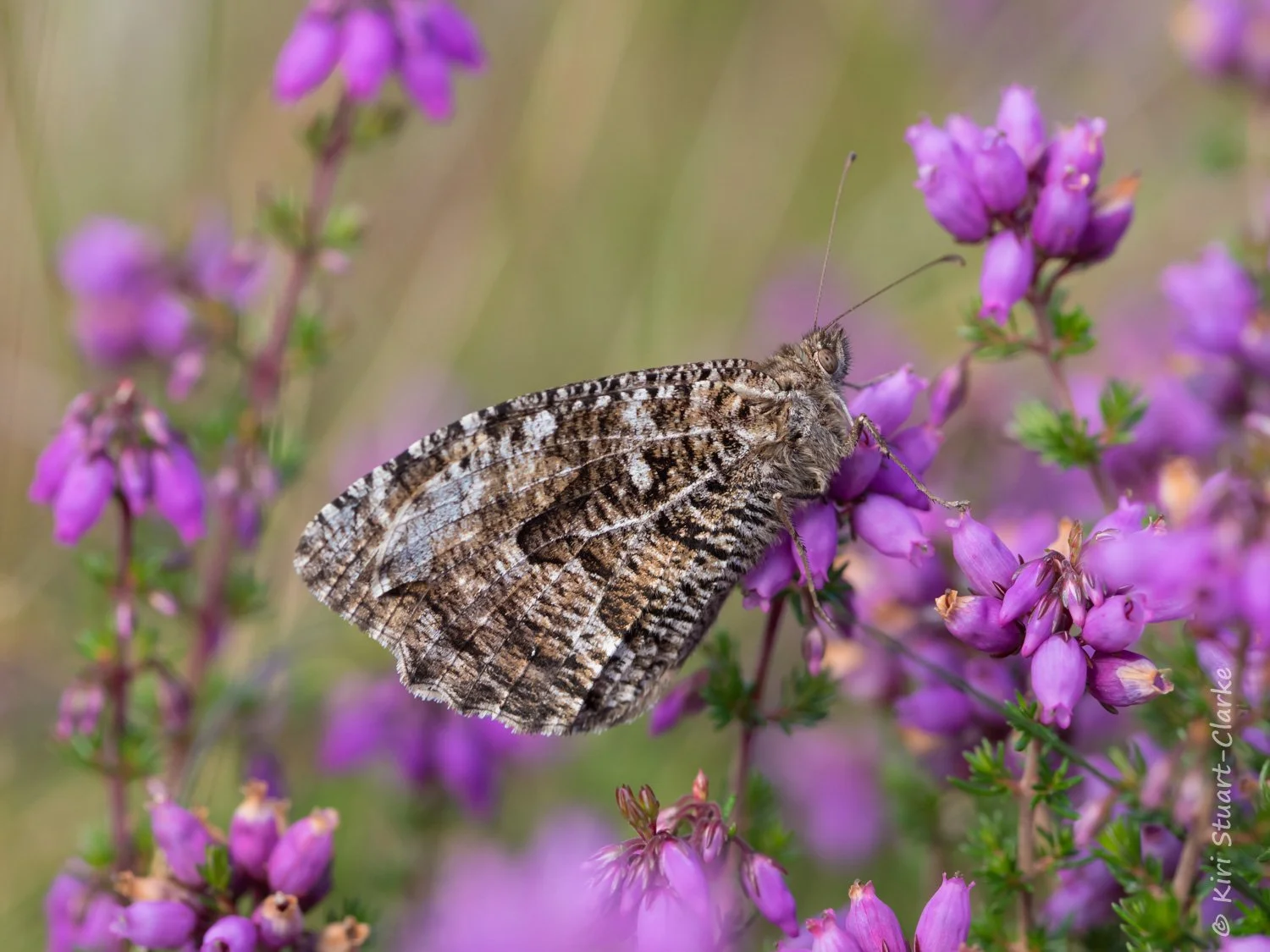
The Grayling is a mottled grey-brown and lacks hindwing roundels.
As this mating pair of Grayling butterflies show, the small amound of orange on the forewing is more of an amber hue.
Size and Wingspan
Distance and sex differences makes size difficult to judge in the field but over time it's possible to develop a sense of bigger than / smaller than between the species that can be useful. For comparative purposes, the smallest to largest average wingsize is listed below.
35mm - Small Heath
43mm - Gatekeeper
47mm - Ringlet
49mm - Wall Brown
51mm - Speckled Wood
52mm - Meadow Brown
56mm - Grayling
Non-visual Characteristics
Habitat and distribution can be invaluable aids to identifying which Brown butterfly you’ve seen, and this comes with practice and experience. Key factors to know are that Grayling and Marbled White are extremely restricted in range and limited to just a few sites in Norfolk at present, and the Wall brown and Small Heath are also less widely distributed than the other species.
Habitat
Small Heath - grassy heaths, lowland moors, coastal dunes
Gatekeeper - lane verges and hedgerows, scrubby heaths, open woodland rides, meadows and grassland
Ringlet - shady hedgerows, damp woodland rides, scrubby grassland
Meadow Brown - dry grassland, verges, woodland rides, scrubland, coastal dunes
Wall Brown - grazed downland, disused railways, field edges, coastal dunes
Speckled Wood - woodland glades and rides, lanes, wooded hederows, gardens
Grayling - coastal dunes, acid lowland heaths
Marbled White - chalkland flower meadows, woodland rides
Flight Times
Just anecdotally, from my own observations in the same locale, Gatekeepers have tended to emerge slightly later than their larger Meadow Brown cousins, but I am sure county level statistics are more trustworthy. In order of appearance, below is a list of Norfolk first sightings from the Butterfly Conservation Norfolk Branch Autumn 2024 Newsletter
Wall Brown - 3/3/23 -17/3/23
Speckled Wood - 25/3/23 - 18/10/23
Gatekeeper - 4/6/23 - 21/9/23
Meadow Brown - 7/6/23 - 16/9/23
Ringlet - 10/6/23 - 24/8/23
Small Heath - 26/6/23 - 25/9/23
Grayling - 26/6/23 - 18/9/23
Host Plants
Small Heath - various grasses including Annual Meadow Grass, Fescues and Bents
Gatekeeper - various grasses including Annual Meadow Grass, Cock's-foot, Common Bent, Common Couch, Fescues and Timothy
Ringlet - various grasses including Cock’s-foot, Creeping Bent, False Brome, Tor-grass, Tufted Hair-grass
Meadow Brown - various grasses including Annual Meadow Grass, Bents, Fescues and Rye grasses
Wall Brown - various grasses including Cock’s-foot, Black Bent, Common Bent, False Brome, Tor Grass, Wavy Hair-grass, Yorkshire fog
Speckled Wood - various grasses including Cock’s-foot, False Brome, Yorkshire fog
Grayling - various grasses including Sheep's Fescue, Red Fescue , Bristle Bent, Early Hairgrass, Tufted Hair-grass
Marbled White - Sheep’s Fescue, Red Fescue, Tor Grass
Resources
Butterfly Conservation Society - Species Information and Factsheets
R Lewington - Pocket Guide to the Butterflies of Great Britain and Ireland
A Riley - British and Irish Butterflies
All images taken by and © Kiri Stuart-Clarke. All rights reserved
Wild Clary
Nature journalling a new discovery for the garden - Salvia verbenaca or Wild Clary.
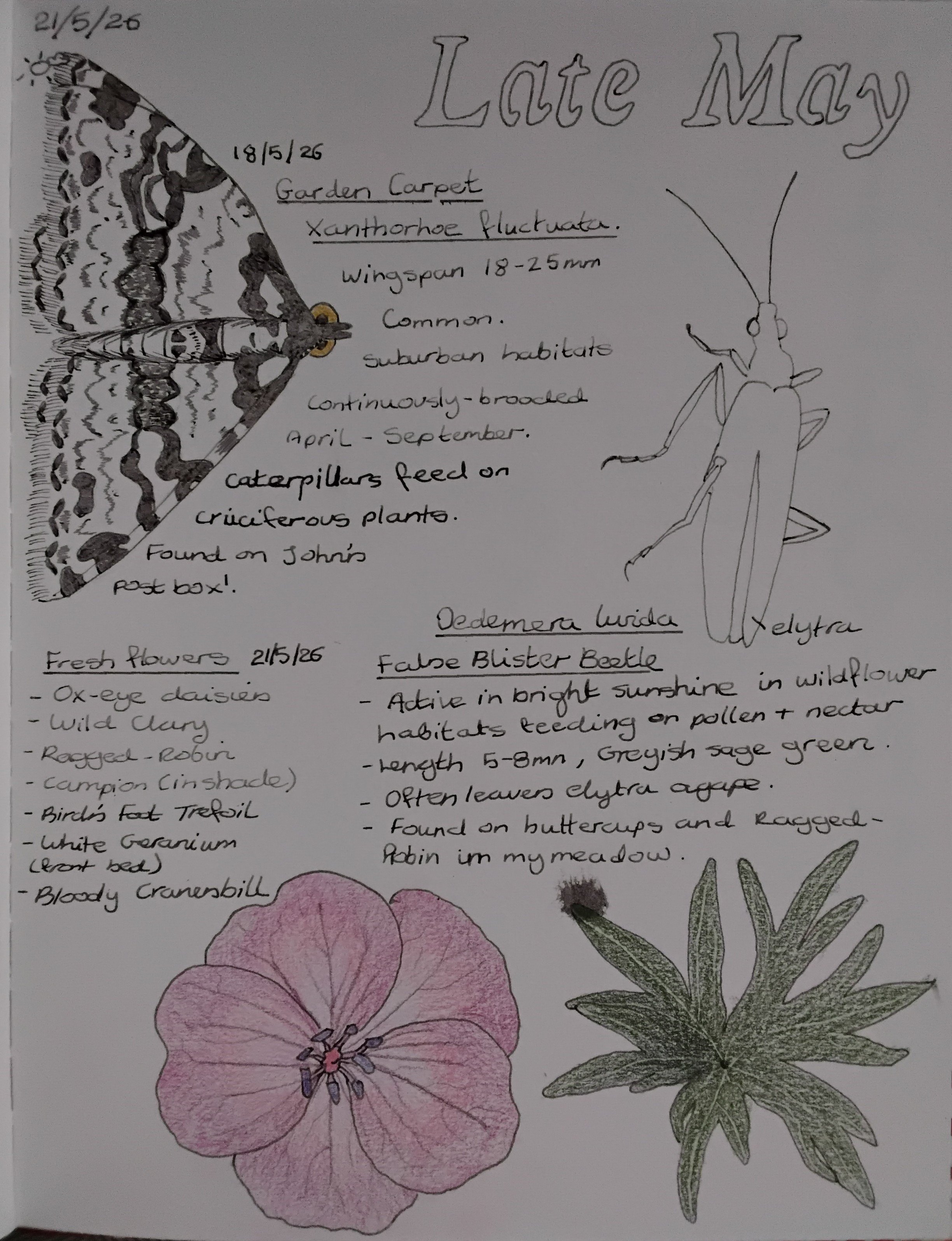
Garden Carpet Moth Late May 2026
My garden safari of 18 May yielded a Garden Carpet moth, False Blister Beetle and Bloody Cranesbill freshly in bloom.
A Painted Lady Year
I wonder if it will be a “Painted Lady” butterfly year…
Weather Wheel April 2026
My monthly phenology wheel of weather station data
Goldcrest in the Winter Cherry
Plenty of flowers but everything is parched and is growing very low in response to the long dry spell / drought. In a first for garden I spotted a Goldcrest foraging amongst the leaves in the Winter Cherry from the sunroom window! Very chufted as it was good sighting and I've only seen them a few times in my life! They are resident and often hang out with Blue tits. Numbers increase in winter due to an influx of Scandinavian migrants.
Large Red Damselfly
John spotted this intermedia male Large Red Damselfly basking on the wall of the house. I wondered if it had emerged recently. Being such early species they really are an auger of spring. It was lovely to see one, especially after being forced to refill the pond, which had dried out amost fully in this strange sunny and dry but cool weather we've beenhaving.
Silver Birch Tree Study
Our oldest Silver Birch that we planted soon after arriving is 15 years old now and c. 25-50ft tall already. They are a very fast growing species. They can play host to over 300 types of insect life so are a pioneer species. Angle Shades and Buff-tipped are among the many moths it hosts.
Butterfly Wings
Butterfly wings are covered in overlapping scales made of chitin. Its stretched like a membrane over a hollow tube framework called verris that carry hemo lymph, air and nerve signals to the wing. Covering the membrane are thousands of tiny scales that overlap like roof shingles. Each scale has long, parallel struts joined to each other by lots of fine ridges creating a lattice.
Purple Bluebells
The Bluebell's hue comes from an anthocyanin, called Delphinidin, that can appear red, purple or blue depending on its chemical environment. PH, light absorption, other flavonoids and metallic ions all affect the final shade we see. Delphinidin has 3 hydroxyl decorations, which shifts the colour towards purple and blue. This marks them as highly visible to pollinators. Colour also changes over time, with the youngest flowers being richest in colour.
April Garden Safari
Peacock Butterflies, Dunnocks and Bird Cherry blossom. I sat out again and spotted a Dunnock busily foraging and flying to the Ivy covered hedge. She must be feeding young in a nest there !. Weather cooler and it turned windy, quite stormy by lunchtime.
Weather Wheel March 2026
An area of high pressure was settled over England for much of the month leading to warmish days and chilly nights. Insanely dry for Spring with just 31mm of rain, the pond nearly dried out!
Winter Flowering Cherry Blossom
Prunus x subhirtella Autumnalis
Produces semi-double white flowers, some tinged with pink intermittently from November to March, opening from deep pink buds. Flowers are sometimes followed by small bitter fruit beloved by birds. It has been awarded the RHS plants for pollinators logo so is presumably good for overwintering and early spring insects. Native to Japan.
A Tiptoe Through The Tulips
Nature journalling Tulips led me to learn a new word, as they have an actinomorphic flower pattern. This means that they are radially symmetrical & divisable by any longtitudinal plane into symmetrical halves