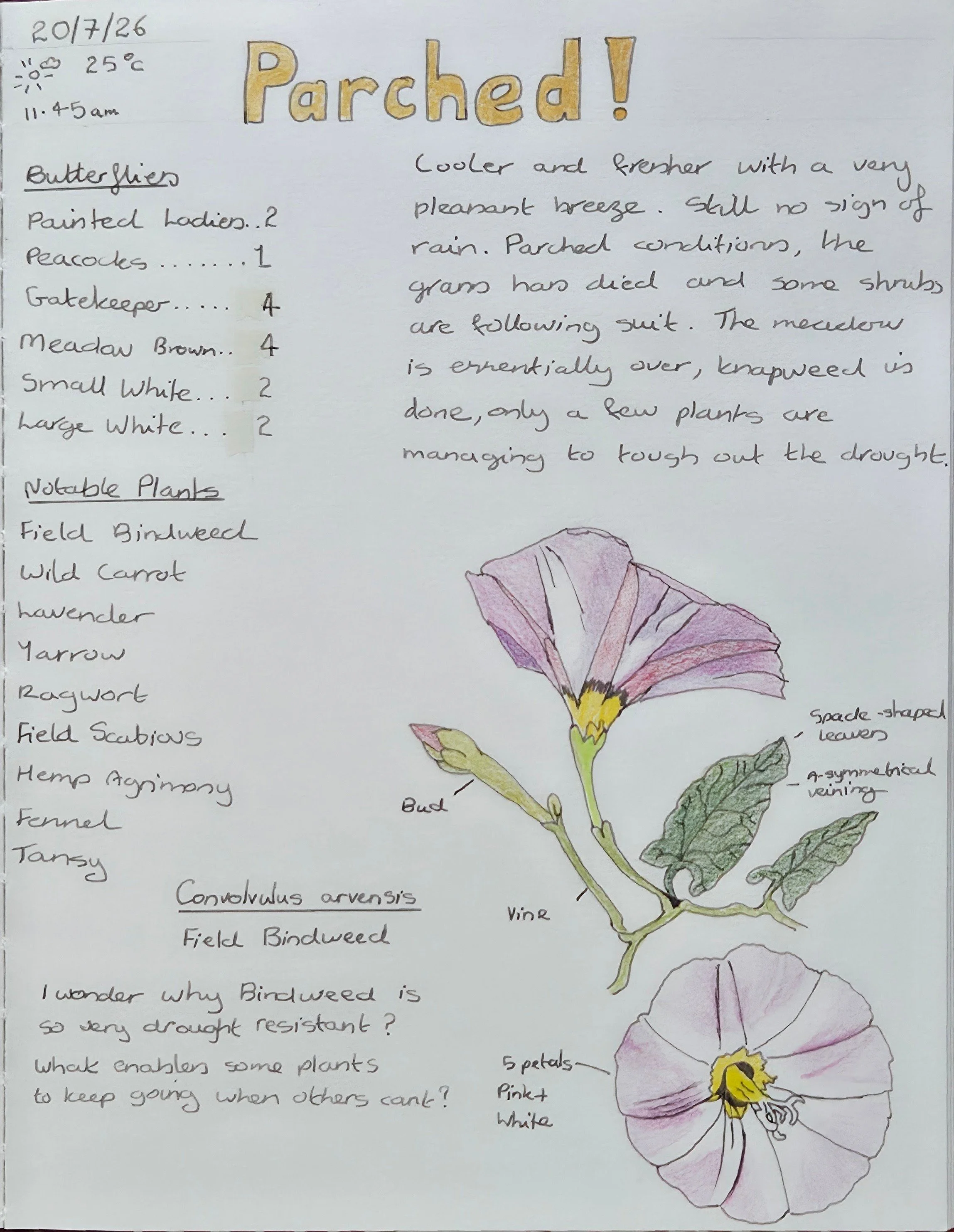
As July went on our heatwave turned into a full-blown drought that saw harvests fail, lawns wither and die, and ponds dry up. At Nar Cottage, even our hardy native wildflower meadow turn a rather bleached shade and our parched front lawn became covered in the gold heads of Cat’s Ears which proved popular with Skipper and White butterflies.
East Anglia was the region worst affected by the drought in the UK, experiencing only 3.4 days of rainfall in July and recorded on 21.1mm of rain in total for the entire month. It wasnt just plants that suffered during the prolonged dry conditions however, butterflies and other plant-munching insects did too.
As many plants wilting away, caterpillars struggled too. One interesting survival tactic for later flying broods of butterflies such as Common Blues was to call it a day and pupate early, emerging from their metamorphosis perfectly a formed, but far smaller adult butterfly than usual.
One species that surprisingly seemed to buck the trend was the small population of Challkhill Blue butterflies up at Warham near the north Norfolk coastline. After several years of unfavourable weather yielding poor to mediocre numbers, the official BCS timed count this year was some 570, up from just 158 last year, and they seemed to have a longer season than usual if the numbers I saw when I popped up the first week of August were anything to go by. Who knows, perhaps there may be some unexpected winners from the curious summer of 2018 after all...
https://www.metoffice.gov.uk/climate/uk/summaries/2018/july/regional-values