I so wonder if this is a “homegrown” hawkmoth as we have three of its host plants growing in the meadow…
Blog
I blog about nature in the Norfolk countryside and about my wildlife garden. My blog blends digital photos with an analogue nature journal.
Nature journalling blends nature observation and citizen science with a written diariy or art journal to build a deeper connection with nature and cultivate curiosity, creativity and flow.
Midsummer's Synchronicity
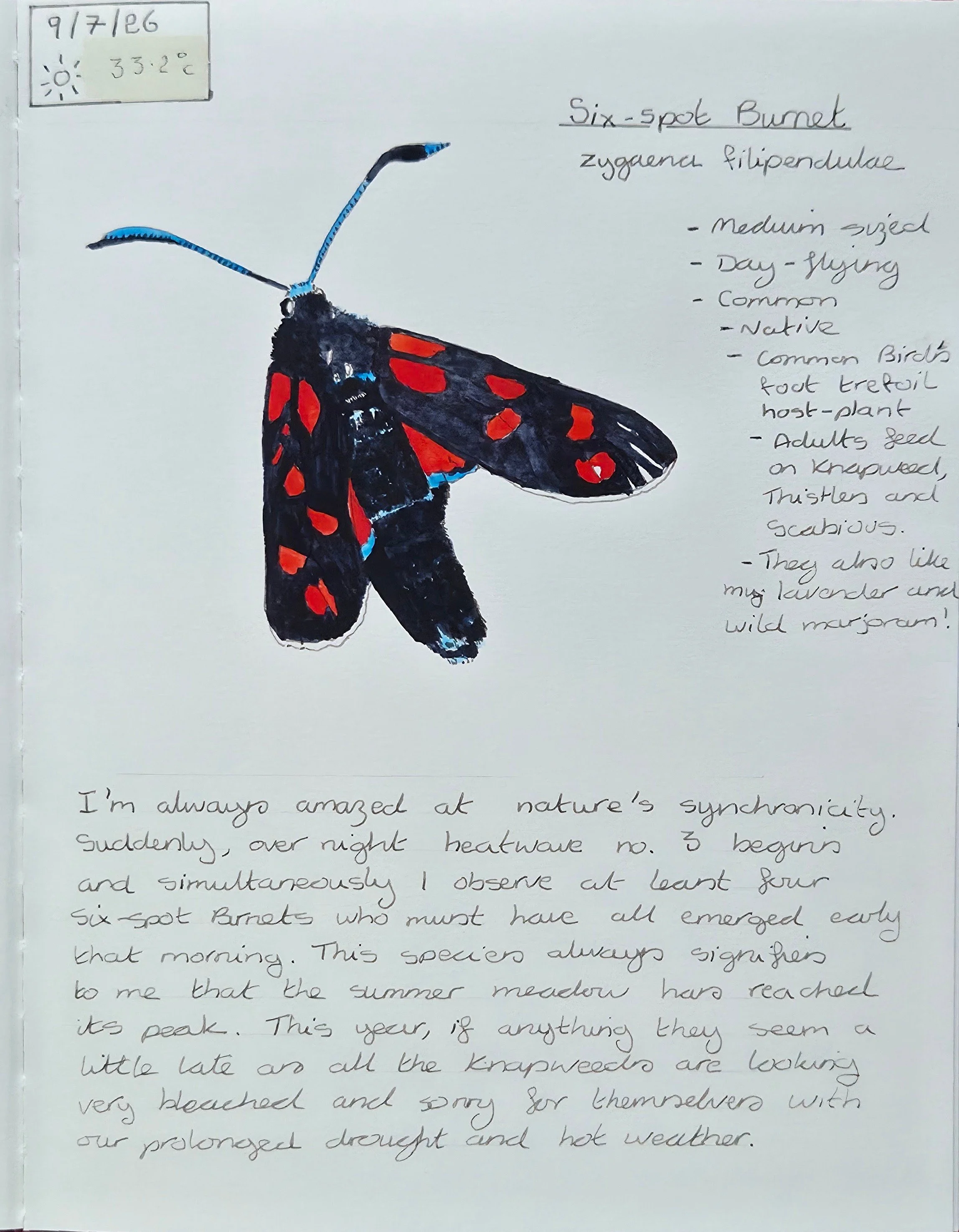
Amidst heatwave no. 3 already, the emergence of Six-spot Burnets always symbolize that the summer meadow has reached its peak.
A Tale Of Two Moths
The hot weather seems to have brought quite a few lepidoptera out. Both of these day flying moths were nectaring on Common Bird's-foot Trefoil, one of their caterpillar host plants. I wonder if they are earlier than usual. I didn't think to add in that data. May try to do so...
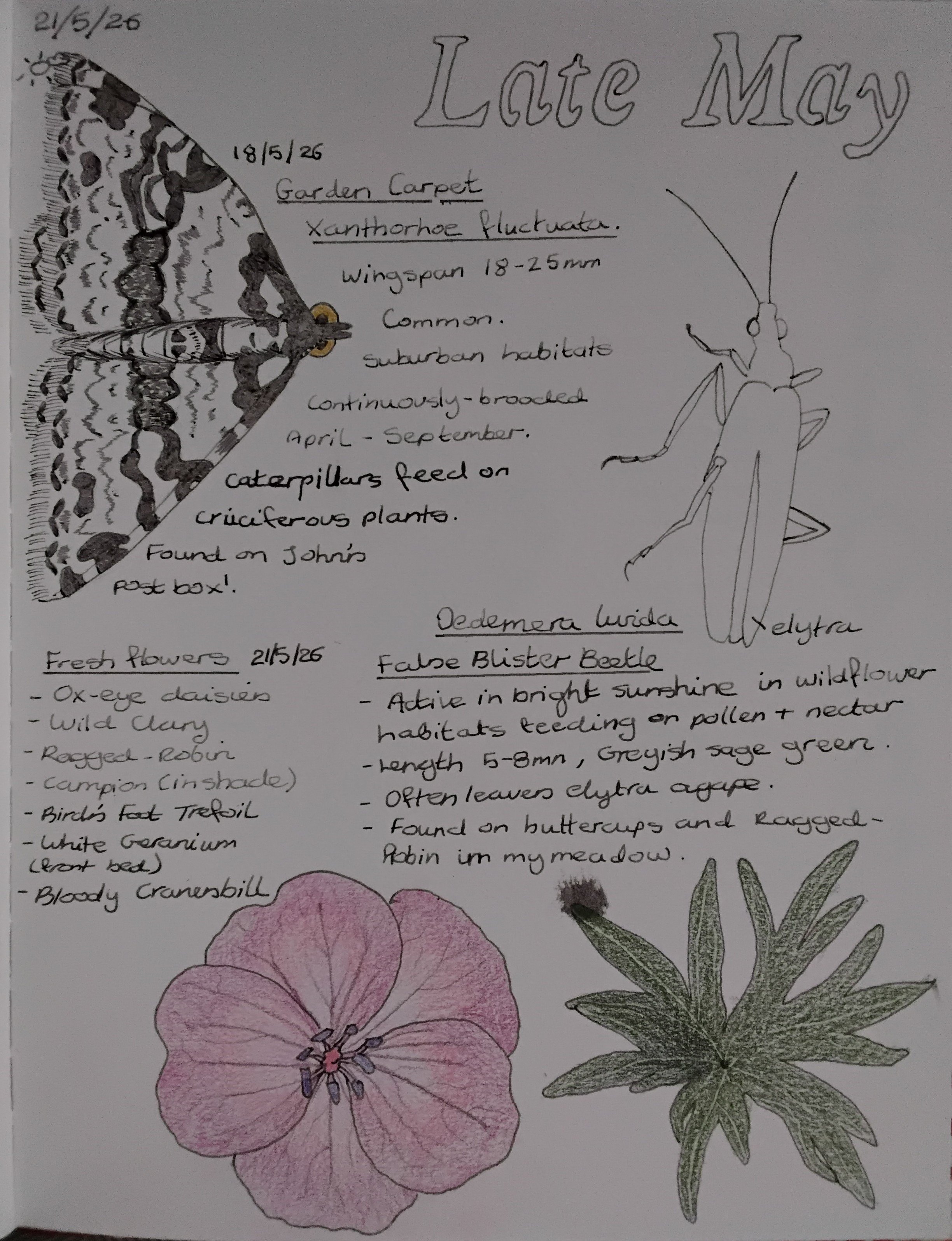
Garden Carpet Moth Late May 2026
My garden safari of 18 May yielded a Garden Carpet moth, False Blister Beetle and Bloody Cranesbill freshly in bloom.
April Garden Safari
Peacock Butterflies, Dunnocks and Bird Cherry blossom. I sat out again and spotted a Dunnock busily foraging and flying to the Ivy covered hedge. She must be feeding young in a nest there !. Weather cooler and it turned windy, quite stormy by lunchtime.
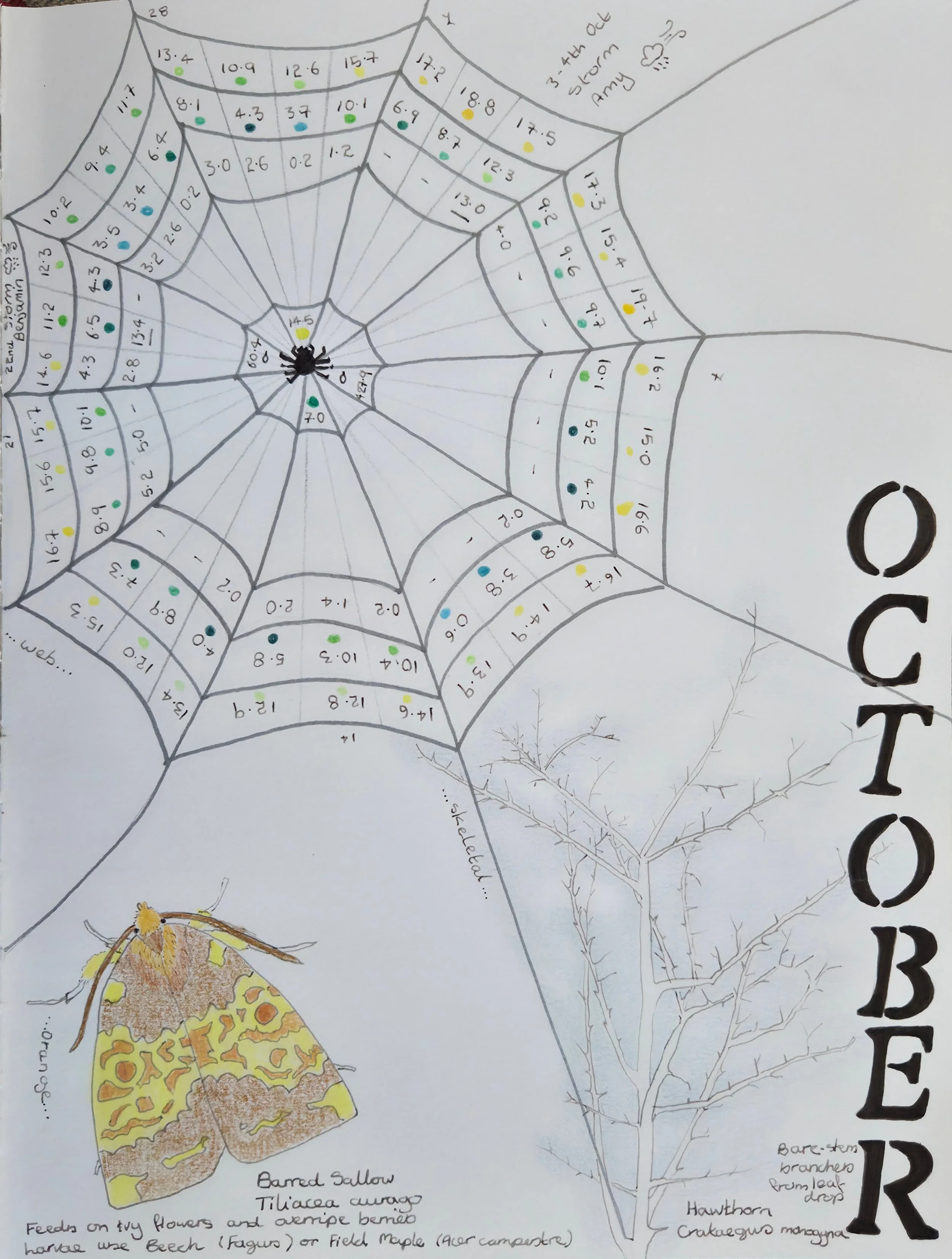
Weather Web for October 2025
Decided to have some fun with the spooky end of month and created a weather web rather than a weather wheel for October.
Flight of the Hummingbird Hawk-moth
One dream I always had was to encourage one of our most delightful winged summer visitors - the Hummingbird Hawk-moth - into my wildlife garden.
I was first inspired after spotting this large and striking day-flying hawkmoth skilfully hovering as it nectared on the English Lavender beds in a cafe in the very next village not long after moving in and discovering what this large, checked, fast-hovering visitation had been.
To this end I diligently grew Red Valerian (which, unbelievably for Norfolk, died), Verbena Bonariensis and several types of Lavender and Lavandin all to no avail, no Humminbird visitation was forthcoming. Later, as I learned about their migrant lifecycle, I also introduced their caterpillar foodplant, Lady’s Bedstraw, Galium verum, into the garden to hopefully encourage the Spring arrivals to breed and perhaps spot one of the second late summer brood moths, still with no luck.
But this year things looked more promising. Even as 2019 was the Painted Lady year, it seemed that 2020 was all set to be the Hummingbird Hawk-moth year instead! With early favourable weather and winds encouraging many more than usual over the channel my chances were better than ever.
In early springtime while wandering along some nearby country lanes I was over the moon to spot one ovipositing on Cleavers, Galium aparine (that’s Sticky Bud to you and me) another Galium family caterpillar host plant. But still there were no springtime sightings in my garden itself. That only left the autumn second brood for a sighting in the most auspicious year for them yet. I began to lose hope. July and August came and went and I began to wonder if the arable surroundings outside my village were just too inhospitable for them.
And then, on 1st September, at the eleventh hour, a little like busses, from my armchair I spotted movement from the corner of my eye. I knew instantly! I leapt up to investigate, then did a double take - it was not just one, but TWO Hummingbird Hawk-moths I was seeing hovering among my patio pots! They busily nectared first on my Bonariensis, then my Lavender hedge (Hidcote strain) and then rapidly zoomed off to visit the the good old White Buddleia at the bottom of my garden. I was as excited as a whippet and dived off down the bottom of my garden at a similar speed to observe them. I certainly discovered just how very fast and restless their distinctive flight was but grabbed a record shot to celebrate my success, 7 long years in the making.
Hummingbird Hawk-moth, Macroglossum stellatarum, nectaring on my White Buddleia
Red, White and err, Pink!
As world cup fever gripped the Nation and England reached the football semi-finals for the first time in decades, and Brexit negotiations seemingly reached an even more parlous state of play, I was instead becoming fascinated by my new moth trap, and the amazing moths being attracted to the lights...
A White Satin moth, Leucoma salicis, perched on the reflective moth trap lid
Pink: One of a dozen Elephant Hawkmoths, Deilephila elpenor, attracted to my twin actinic skinner moth trap