Blog

I blog about nature in the Norfolk countryside and about my wildlife garden.

Blowin' in the Wind ....

A Red Poppy for the Somme

In a momentous week that has witnessed a constitutional crisis in the UK and political skulduggery to rival Machiavelli, perhaps the most important event of all was remembering that, only a hundred years ago, Britain was in a state of war with another European country. Our grandfathers were about to face the onslaught of the Battle of the Somme, the most fatal of all battles in the “War to End All Wars”.

A simple common red poppy (papaver rhoeas) blowing in the wind serves to remind us that many, many men gave their lives for our freedom.  The peace , prosperity and personal liberties that our European generation has enjoyed until now was won only through the greatest of sacrifices that most of us in our modern lives can’t even imagine – the blood spilled by our forbears.

Our week’s events, when viewed from this bigger perspective, suddenly seem to be all about petty self interest and almost inconsequential. But we can’t afford to take the life we lead today for granted, things could easily be far worse. Intolerance is a slippery, treacherous slope and can at first seem quite innocuous.

Above all we should not forget what the European project was all about when it first started.

Just one little word....

Peace

The Uncommonly Beautiful Common Spotted Orchid

Recently I visited Foxley Wood NWT while volunteering with Norfolk Butterfly Conservation Society on a Hawk moth event. As I arrived I spotted this beautiful Common Spotted Orchid (Dactylorhiza Fuchsii) nestled in a corner of the grassy verge.

I simply couldn't bring myself to leave without stopping to admire and photograph the group of delicately coloured Common Spotted Orchids. They must like damp weather as they have done very well here this year! 

The name "Common Spotted Orchid" really doesn't do this humble, yet beautiful plant justice. There's nothing common about this diminutive Orchid at all; in fact this flower is the epitomy of subtley, daintiness, elegance and refinement.

Raising a Yellow Flag

The Yellow Iris, or Yellow Flag, Iris Pseudocorus, is one of surprisingly few native British pond Irises. The vibrant and beautiful Yellow Flag makes its home in the damp clay and loamy soils of wetlands and marshes. It thrives in the Fenland habitat of the Norfolk Broads and is widespread across the county. 

Yellow Flag is rich in wildlife value, is popular with bees and hoverflies which pollinate its hermaphrodite flowers, The drooping yellow tepals provide a landing platform for insects. The dark yellow patch in the centre, surrounded by a zigzag line acts as a guide directing the insect towards the nectar source. It also acts as a caterpillar host plant for seven moth species including the Belted Beauty Red Sword-grass and Water Ermine. The remaining four moth caterpillars live inside its thick reed-like stems.

Frequently known as "Daggers" it has several other traditional names including Segg, Swordgrass also referencing its blade-like foliageas well as False Acorus, Fleur-de-lis, Water Flag.

It has a long folklore tradition, being said to be the original inspiration for the fleur-de-lis used in heraldic designs. In Ireland it was believed to avert evil and bunches were hung up outside doors during the feast of Corpus Christi. The rhizomous roots yield a black dye and ink and are extremely acrid. Traditionally the dried roots were also used medicinally as a cathartic, emetic and as an astrigent to halt bleeding, while the roast seeds were used to make a form of coffee, though there is uncertainty as to its toxicity. The plant also generated a pleasant essential oil, which was often used to dilute that of the Sweet Flag, Acorus calamus, giving rise to Yellow Flag’s alternative name of False Acorus

Sadly this species tends to gets overlooked by mainstream garden centres in favour of more popular blue-coloured Irises, which are actually Asian in origin, not native to the UK so do not afford the same value to wildlife.  

With a little care Yellow Flag Iris can be a wonderful addition to most wildlife garden ponds.  In particularly favourable conditions the Yellow Flag Iris will thrive and can become a little over vigorous, so growing it in containers is a good idea to avoid it taking off too dramatically, if you have a smaller ponds or bog gardens.

Fortunately my pond margin has plenty of room and mixed companion planting is providing competition from other marginal plants such as Purple Loosestrife, Meadowsweet, Water mint, Reedmace (Typha), true Bulrush (Scirpus Lacustris) to name but a few. So far this approach seems to have kept the pond margin mix nicely balanced.

Alternative names: Daggers, False Acorus, Flagon, Fleur-de-lis, Jacob’s Sword, Segg, Swordgrass, Water Flag, Water Skegs, Yellow iris, Yellow Flag

Moth Caterpillar host for: Belted beauty, Crescent, Crinan Ear, Red Sword-grass, Rush Wainscot, Water Emine, Webb’s Wainscot

Broad-bodied is beautiful...

Meanwhile our faithful Broad-bodied Chaser dragonflies, Libellula depressa, have returned for another season. This yellow coloured female has been busy making herself at home amongst our new, wildlife-friendly winter meadow Campion flowers in the sunny, sheltered west-facing Old Rose Garden…

Female Broad-bodied Chaser dragonfly, Libella depressa, perched on Campion in our winter meadow. Immature males are a similar colour

Broad-bodied Chasers were the very first dragonfly to show up, arriving in the first week of June 2014, our ponds first season. According to the British Dragonfly Society and Brook’s fieldguide they are an early species that prefer shallow sunny ponds and lake margins. Broad-bodied Chasers are common and widespread across Britain, although they have become less common in Fenland districts owing to the loss of farm ponds. The species becomes less abundant in ponds in late successional stages, but can be encouraged back by clearing marking vegetation.

The wide dusky blue abdomen of the male is unmistakeable. Both immature males and females are yellow and black and look a little like Four-spotted chales but lack the additional dark spots.

In the immature stage Broad-bodied Chasers may wander widely and can be found among hedgerows. Once adults sucessfully mate at a site the male will adopt and guard the pond as his territory, only moving on if he runs out of luck. They certainly proved very obliging to photograph to as they perch frequently in between laps of the pond, returning to the same stem each time to look out for rivals and females. When in residence they’re highly territorial on their short patrols, I even observed one successfully see off a larger passing Southern Hawker dragonfly.

Male Broad-bodied Chaser dragonfly, Libellula depressa, the very first species to arrive and colonise our wildlife pond.

A female Broad-bodied Chaser ovipositing in the clear water of our wildlife pond in early June 2014

Here there be Emperor Dragonflies

Its been a big week for Nar Cottage's wildlife garden as we discovered that our first "home grown" dragonfly had completed its three year lifecycle. This photo is of an Emperor dragonfly, Anax imperator, nymph "exuvia". That’s the exoskeletal shell left behind after the dragonfly nymph transforms into an adult dragonfly and emerges as a winged adult. The Emperor's emergence takes place overnight so sadly we didn't see it happening.

Emperor dragonfly Exuvia

According to the British Dragonfly Society Emperor dragonflies are highly territorial and rarely settle, even feeding on the wing, while Brook’s fieldguide states that “Its vigour, agression and agility in flight are unequalled in Britain”. Emperors look very like other Hawker species, particularly the Southern Hawker, but often fly with a drooping rear abdomen and their apple-green thorax, which lacks the black stripes of other species, help to distinguish it. The female has a green abdomen, which may turn blue in hot weather.

Emperors are known for being early pioneers of new ponds and were one of the very first visitors to our brand new, bare-earthed pond back in 2013. Three years on and our pond looks very different, now teeming with aquatic life and surrounded by lush native plants and wildflowers that have spread out to cover much of its surface.

Our original Emperor dragonfly, Anax imperator, ovipositing on the base of reeds in 2013

In line with their reputation for preferring clear water, to date the Emperor dragonflies haven’t returned since that very first season, but we continued to see lots of Broad-bodied Chasers, Southern Hawkers as well as various damselflies about. Emperor dragonflies will even predate upon other Chaser dragonflies, so I hope our population of those survives its emergence!

Springtime in der Eifel

Spring has well and truly sprung with a couple of weeks of glorious weather in the UK and the continent. Here a small selection from a short trip to the beautiful Eifel Nationalpark on the German-Belgian border, with lush meadows dripping in springtime wildflowers and vivid dappled green woodland trails bursting with life...

New season's foliage in deciduous woodland on the slopes

Apple tree blossom on a hot sunny circular walk around a 45 thousand year old Meerfelder Maar - a volcanic crater and lake or "Maar".

Wildflowers and butterflies were very similar to those in the UK with cuckoo flower, dandelions, stitchwort and marsh marigolds and dandelions in the downland meadows.

An enticing dappled woodland trail on the Lieserpfad hiking route

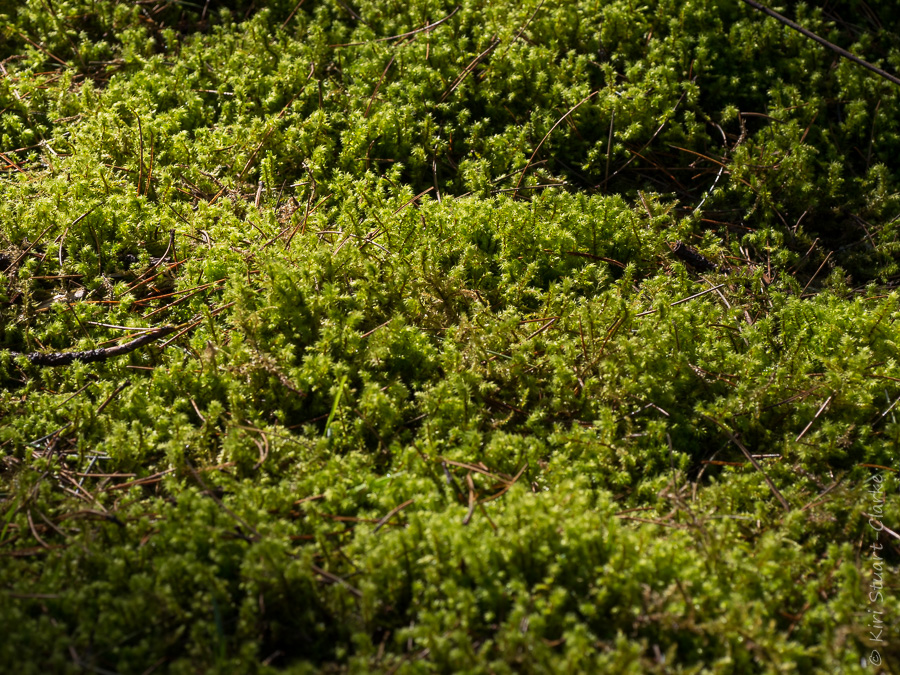
Big ... Shaggy ... Moss

Sometimes its all about the light, about the light, and mossy woodland...

Big shaggy moss, aka Rhytidiadelphus triquetrus, at Wells-next-the-Sea in Norfolk

Big shaggy moss, aka Rhytidiadelphus triquetrus, at Wells-next-the-Sea in Norfolk

No really, "Big shaggy moss" is the name of Rhytidiadelphus triquetrus, which grows on calcareous ground in woodland, and also on acidic ground in woods of native pine (Pinus). It can also be found in open grassland on chalk, on sand dunes and in churchyards, so is a natural contender for the Corsican pine and sand dune habitat of Holkam and Wells-next-the-Sea beach and SSSI.


Signs of Spring - Insect and Amphibian Emergence

At last...! Some milder days in between the blustery weather, ones when you can really feel the sun on your back. Slowly more signs of spring are present. Insects start to emerge from their overwintering. Though I've yet to photograph my first butterfly of the season (a brimstone on 25th March) I've enjoyed watching out for the early emerging bugs, bees and, that renowned augury of springtime, the first amphibian frogspawn.

My first sign of early spring insect life was this female Minotaur beetle. One of 8 British "Dor" beetles, she emerges in March and roams woodland and pastureland. Despite their size and fearsome looks, Minotaur beetles are herbivores feeding on ruminant dung. After mating she will dig a burrow up to a metre long to lay her eggs.

My second insect sighting was while out gardening. I saw the most gigantic queen buff-tailed bumblebee crash land and nectar furiously on my white crocus. She clambered across our daisy-filled "Meadow Mat" at a surprising rate of knots, looking like she was on a mission, perhaps seeking a nest site to  establish her colony for the season. Sometimes known as the Large earth bumblebee from their latin name Bombus terrestris, Buff-tailed bumblebees are one of the earliest bees to emerge in spring and also among the largest to visit gardens in Europe. 

Looking closely you can see some mites hitching a ride on her thorax. Unlike some mites, they are not parasitic but are in fact harmless detrivores, who survive by living in the bumblebee nest and providing a cleaning service to the colony, feeding on old beeswax and other detritus.

mites-on-bumblebee

And last but not least, frogspawn arrived to our pond on the 26th March this year, 4 days later than last year and in smaller quantities. With a greater amount of protective pond plants established, hopefully the tadpoles will stand a better chance this year against our hungry newt population.

In The Bleak Midwinter....

Its January, normally the time of Jack Frost and blankets of white, mittens and snowballs...well not tis year!

El Nino seems to have put paid to all that white stuff in East Anglia for 2016 , which could be one of the warmest (not to mention wettest and windiest!) on record in the UK. 

The mild weather also has our plantlife well and truly fooled, with primroses and daffodils nodding alongside snowdrops and aconites. So, instead of a classic snowy winter's scene, this January's blog is of a winter's walk amongst the silver birch catkins at Narborough.

Nodding catkins, a harbinger of spring still some months away

Evergreen bramble leaves are a welcome sight of green

Winter light has a wonderful glow

A rare blue sky day amidst the brutal sou'westerlies of winter 2016

Mild winters can cause unusual numbers of pests

Digital Photography and Copyright in the Internet Age

Copyright symbol - © Kiri Stuart-Clarke

Copyright symbol - © Kiri Stuart-Clarke

We now live in a digital age, one where copyrighted data and images can flow freely across borders, even all around the world, in the blink of an eye.

But what does that really mean for our copyright, what are the risks of image theft, is it safe to use an image we find and how can we protect our intellectual property right?

This article explores some of the key facts and issues surrounding using digital images on the internet that we need to know.

Who Owns An Image's Copyright?

In the vast majority of situations the person who creates an image (“the creator”), such as somebody who takes a photo, is the owner of the original copyright.The Designs, Copyright and Patents Act of 1988 enshrined this right in UK law. Copyright holders can grant permission to use "license" or transfer ownership ("assign") their copyright to others.

Do all images have a copyright?

Legally, copyright lasts for the lifetime of the creator plus 70 years after the year of their death, and many older digitised images from image libraries had copyrights renewed, so in practice most images will be held under copyright.

What Does This Mean For An Image User?

In a nutshell - respect the image owner and ensure you have permission.

In practice, almost any image you find on the internet is likely to be protected by copyright, so it is only safe to use it if you are sure there is specific permission to do so in place, for example through a licence or in the terms and conditions of the website supplying the image.  Remember, you are responsible for ensuring that you have permission to use the image. Its safest to start out with the assumption it is copyrighted.

At its most basic level, if you want to use a photo, in any form, you need to seek permission from the copyright owner. Even if it's a friend’s photo or is to be used for non-commercial purposes such as downloading a photo to use as a desktop screensaver.

Remember, you are responsible for ensuring that you have permission to use the image. Its safest to start out with the assumption it is copyrighted and if you’re not sure – always ask first!

So can I use images at all?

Don't get too worried, just sharing a link is okay, and is of course what social media is meant to be all about. The Court of Justice of the European Union ruled that internet users should be free to share links to material that has been published online with the permission of the rights holder

However “Tagging”, that is displaying a hosted image or copying and hosting images on another website, probably does constitute copyright infringement.

Don't forget also that modifying someone else's photo, even if it's by a friend, and even if it's only for a joke, could well be an infringement of the image owner's copyright, so do get their permission first. 

The Rise Of Image Theft

The rise and rise of the internet and social media has also unleashed a wave of image theft, that perhaps in some ways might be compared to video piracy when technology first enabled video tapes to be copied. 

For some psychological reason, activities carried out on the internet often don't seem to be ascribed the same weight that they would be in the real world and seem to be perceived as not "counting", perhaps because the victim is invisible at the time and the perpetrators may experience a false sense of anonymity that liberates them from a sense of consequences or repercussions.

Certain fellow photographers, for what are to me quite incomprehensible reasons, have even taken to stealing other photographer's images and passing them off as their own on image sharing sites and social media in order to pad out their portfolios, or perhaps simply to gain a fleeting ego boost. Of course such antics were  always to be seen in not a few camera club competitions in the physical world too, but the technology of the internet world has created a step-change by making this so very easy to do at the click of a mouse button.

Of course such image theft is unethical in the extreme, cheating both victim from credit and also the perpetrator themselves from gaining the chance to learn and improve their own work. More seriously, such an act is unequivocally a legal copyright infringement.

Sadly there is also of course a more sinister side and the issue of "professional" image theft by criminal gangs for all manner of purposes which is even harder to spot and combat, although recent search by image capabilities are now starting to make tracking down such illegal activities easier.

Photographing Art Work

Pictures at an Exhibition(the Artist had provided his work for a charity event and agreed to photo coverage)

Pictures at an Exhibition
(the Artist had provided his work for a charity event and agreed to photo coverage)

One thing for photographers to be mindful of is accidentally infringing another's copyrighted work.

If you photograph a creative piece of art under copyright and it is the main subject of your image then you may inadvertantly be infringing another’s copyright.


What Does This Mean For Digital Photographers?

In a nutshell - be aware, protect yourself and assess the risks. 

Yes, your copyright is protected by law online as in the real world. But once you publish an image online, it is "out there" in the cyberspace for others to enjoy, share, comment on, use and inevitably, human nature being what it is, potentially misuse.

You of course stand to benefit from exposure, kudos and social media "likes", but at the expense of a certain loss of control over your image once it enters the public domain. That is unavoidable and to a certain degree that risk has to be accepted as an "occupational hazard".

There are of course sensible precautions you can and should  take to protect your images and copyright.

Check Websites' T's and C's

Firstly DO spare the few moments it takes to check the terms and conditions on any internet, image sharing or social media website when you join before you start posting images and check back periodically as terms do change and get updated.

Quite a few have surprisingly unfavourable copyright terms and conditions  for photographers that at the very least enable them to make your images available for others to use, without your prior permission or notice.

The worst might even attempt to assign your copyright over to themselves which would leave defamation or privacy laws your only recourse in a dispute if your image were then to be used in a way you don't like.

Whatever you do, DON’T surrender or give your copyright away, this undermines the value of you time and effort and photography as a creative genre.

 Thankfully following a backlash by many photographers against unfavourable terms of use, several of the more established sites have recently been improving their terms.

Will "watermarking" my image give me more protection?

In the UK despite misconceptions you don’t have to watermark your image to assert your copyright as its creator, that said, it is a good idea to do so in order to ensure that people are clear that copyright exists on the image and that they know who to contact to obtain permission.

So it is worth copyright marking your work, but not excessively, heavy watermarks often destroy enjoyment of images and in reality don't prevent determined thieves as these days clever software programs exist that can completely remove watermarks. 

Enforcing Copyright

With the internet now established as part of everyday life and being accessed on tablets, smart phones outside the home, it's now easier than ever to republish copyrighted works. So it is not surprising that copyright breach cases have risen so dramatically, but if you are caught using an image without permission and infringing another's copyright there could be serious financial and legal consequences.

On social media there is a growing backlash by photographers who have fallen foul of image theft rallying against the misattribution of other photographer's work.

With perpetrators now being more easy to track down through image search an increasing number of culprits are being brought to task and "named and shamed" publicly as well as receiving lifetime bans from sites.

Some of the big photo libraries have been using reverse image searches to track down illegal usage of their photos and are retrospectively billing the web designers.

As technology continues to advance and laws and policies start to catch up with technology, people who think copyright infringement will not be detected are increasingly likely to get a nasty surprise. The internet is now far less anonymous than you might think, with cookies embedded almost ubiquitously, in many respects individuals' activities online are tracked far more extensively online than they can be in real life. So infringers do run a genuine and increasing risk of being discovered, shamed and potentially even being pursued through the courts as a consequence.

Hopefully the situation for photographers will continue to improve as awareness of the issues around data, copyright and image theft continues to grow, and bad behaviour of all kinds on the internet becomes increasingly socially unacceptable. 

Further Information And Disclaimer

While this article is written in good faith, I am not a lawyer cannot guarantee 100% factual accuracy and this does not constitute any sort of legal guidance. If you are in a copyright dispute it is best to seek qualified advice.

If you are interested in the topics explored by this article here are some of the resources that are available:

The UK Government's Intellectual Property and Copyright Law Website  

A helpful plain English IPO Factsheet called "Copyright Notice: digital images, photographs and the internet" (Number: 1/2014 Updated: March 2014)

www.stopstealingphotos.com - one photographer's battle to challenge image theft got them bullied and temporarily barred from Facebook.

A plagiarism today article on Facebook and Copyright following one victims experience and how Facebook staff were themselves unaware of copyright rules.

Facebook – search for photo stealers